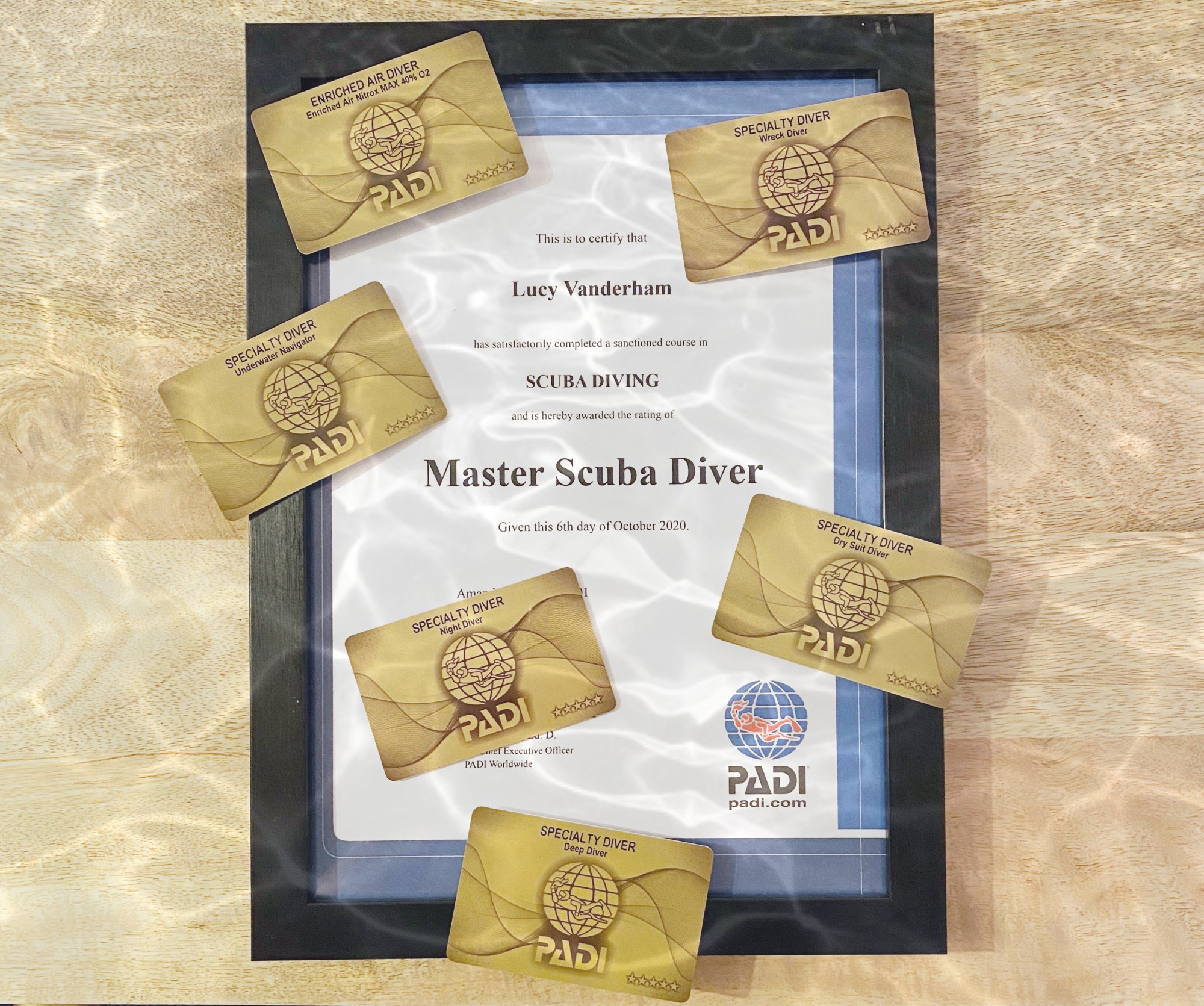

Specialties have granted me the most enjoyable diving journey, but they are not a necessary stepping stone towards making a career out of scuba diving, and many say they are just a money-making scheme. However, you do need a minimum dive number in order to start the professional diving courses, and if like me, you powered through to rescue diver in only 20 dives then you’ll have a while to go before you reach the minimum. It’s a common theme in my life that I don’t do anything by half measures, so if I am going to be a professional diver then I am going to work my hardest to be the best version of Scuba Diver Lucy that I possibly could be. So, it made sense that I used my required 30 further dives to explore different diving conditions and opportunities, through speciality courses. And I really believe I wouldn’t be nearly as confident and skilled underwater as I am had I chosen not to do specialities. Plus, you get really cool GOLD certification cards and the option to become a Master Scuba Diver after completing five specialities, which has a nice ring to it.
Wreck Diving
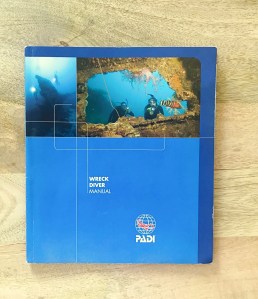
I had a vague idea of which specialities I wanted to do, ones that would allow me the most diverse diving opportunities and experiences. But within that, it was primarily the destination that dictated the course. South Africa offered a great place to start wreck diving, hosting a range of beginner and intermediate wrecks. Unfortunately, we were confined to just one wreck for the duration of my course as the weather was pretty turbulent and caused some intense surge and waves, meaning our wading water entry was somewhat less than graceful. The crests were just about slapping us in the face and my instructor even lost her mask! But the wreck we did get to was perfect for the skills I needed to practice, mainly focused around wreck penetration and using the penetration reel correctly (when you do enough wreck diving, you eventually become unperturbed by the word penetration). It’s fumbly work, and yes I did get tangled in the reel, and yes I did kick up silt in the wreck, and yes I did drop the torch… but I eventually got the hang of it, and wreck diving is now my favourite type of diving.
Night Diving
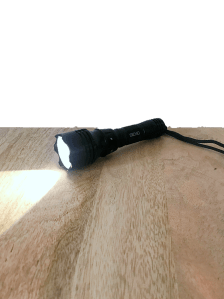
I was drawn to night diving after hearing stories of the amazing bioluminescent organisms that can create an unbelievable underwater light show for you. And the opportunity to observe nocturnal animals at their most active. But we didn’t see any of that. The Floridian nearshore stays shallow for a very long way and so the deepest we got to was 3.9 meters. Shallow diving is more demanding of your buoyancy skills, as you have less space between the surface and the ocean floor. If some in your diving group or buddy team aren’t as experienced, their movements can easily kick up sand which severely impacts visibility. Coupled with windy January weather and the subsequent poor visibility caused by wind, we could barely see our hand in front of our faces… and it was pitch black of course. But in a way, I’m really glad that this was how I learnt to night dive. They say the conditions that you learn in should always be the baseline of what you dive in thereafter, as a safety precaution so divers don’t put themselves at risk in conditions they’ve never experienced. So, if anything, this means I will struggle to find any worse conditions that would stop me from night diving in the future. The night diving skills could be categorised as learning to communicate with your torch, and the extra safety precautions that should be taken.
Dry Suit Diving

In the same way that the night diving course was primarily focused on being exposed to new diving environments/safety techniques and different types of equipment, with only a handful of practical skills, so too was the dry suit diving course. I was extra nervous about the dry suit course, since I pride myself on having pretty excellent buoyancy skills and this dry suit was about to throw a huge spanner in the works. My nerves were not calmed any by turning up and finding myself in a group of 11 men, with myself being the only woman there. Of course, it turned out these guys were super friendly and helpful, and a lot of them were just as nervous as me. There were two main skills to master; firstly, being able to adjust the amount of air in the dry suit through the new inflator valve in the middle of your chest and the deflator valve on your shoulder, and also being able to redistribute the air in the dry suit. It was quite the odd sensation having your instructor tip your head down and your feet up. Once those were out of the way, we had the most incredible two dives, and I can’t wait to get back into Scottish water.
Navigation
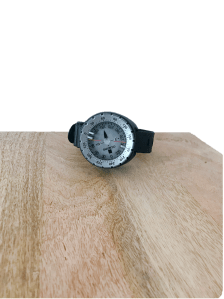
If someone had said to me at the start of my diving journey that I’d end up doing a speciality course in navigation, I’d have said there isn’t enough money in the world to convince me. I did an intro to navigation dive during my advanced course as well as intro to search and recovery, so I told myself that was probably enough of the difficult stuff, let’s stick to the exciting specialities. But once I knew that I wanted to pursue diving as a career, navigation skills were suddenly back on the radar and I signed up for this course, somewhat begrudgingly. But it’s super important as a diver, and just generally in life I guess, to refrain from relying just on the skills you’re naturally or effortlessly better at, and instead work to become a better all-round professional. In any case, turns out the navigation course was one of the most enjoyable courses I’ve done! If you ever need someone to relocate found treasure or draw a to-scale map of a wreck using only a compass, I’m your gal. The skills were maths heavy, which isn’t my strong suit, but having a retired maths teacher as my instructor, I was in a pretty fortunate position to learn.
Deep Diver
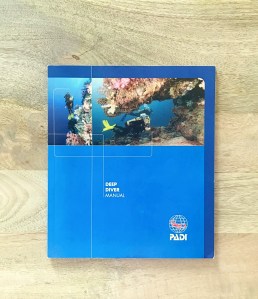
Another course with a low emphasis on new practical skills, but very high emphasis on safety measures and conservative diving techniques. A fairly self-explanatory course here, we got deep. I recorded my deepest dive to date, 39.8m, certifying me to 40m. Of course, always obeying limits, deep diving means short dives and long surface intervals, with a clear understanding of no decompression limits and decompression stops. Anything past 40m, and you’re into technical diving, which requires a lot of further training. But 40m is a pretty reasonable limit for recreational diving, giving you a bottom time of around 10 minutes without the need for a decompression stop. You have also got to be careful of becoming narcked at that depth. Gas narcosis is a very interesting but dangerous diving phenomenon, the likelihood of which increases with depth and can cause you to lose judgement, reduces your reaction time and negatively impacts your fine motor skills. I do enjoy pushing myself and so the deep diving course was a really exciting way to safely step out of my comfort zone.
Enriched Air

I know you only need five specialities to become a Master Scuba Diver, but I was encouraged to do one last one as it pairs so nicely with the deep diver course and opens another door to better and more enjoyable diving. Looking back now, even if I had done the enriched air course earlier, I still would’ve done all six as I couldn’t pick one I feel I don’t need or haven’t since used. Basically, learning to dive with nitrox (a gas mix with higher oxygen content), allows you to have a longer bottom time, since there is less nitrogen in the gas you are breathing and therefore less nitrogen being absorbed into your tissues. A large part of this course is learning about oxygen toxicity under pressure, and how diving with nitrox imposes a new depth limit to be observed, depending on the percentage mix. To verify the gas percentage mix in your cylinder, you get to play with a fun little analyser machine, and new settings on your dive computer.
Divers are always encouraged to continue their education, even past the professional realm of Divemaster and Instructor, as there is so much to experience and learn in the underwater world. It’s an exciting feeling to know there’s always somewhere or something new to experience.
 Dive With Lucy