Dressed in my best ‘basic white girl’ travelling attire (Bicycle shorts and a tie dye crop top, of course), with a bag full of scuba equipment and a few bikinis tucked around it, I stepped off the plane in Malé.
The Maldives had been on the bucket list for a while, since rising ocean levels meant it would soon be an impossibility. So, when the ‘safe to travel’ list during the virus that shall not be named, gave it a green light, I was pretty stoked. I was a fresh university graduate who was unable to celebrate my graduation or attend normal job interviews, so what better time to take advantage of the ‘travel for education’ permits and spend 5 weeks in white sand and blue water paradise.
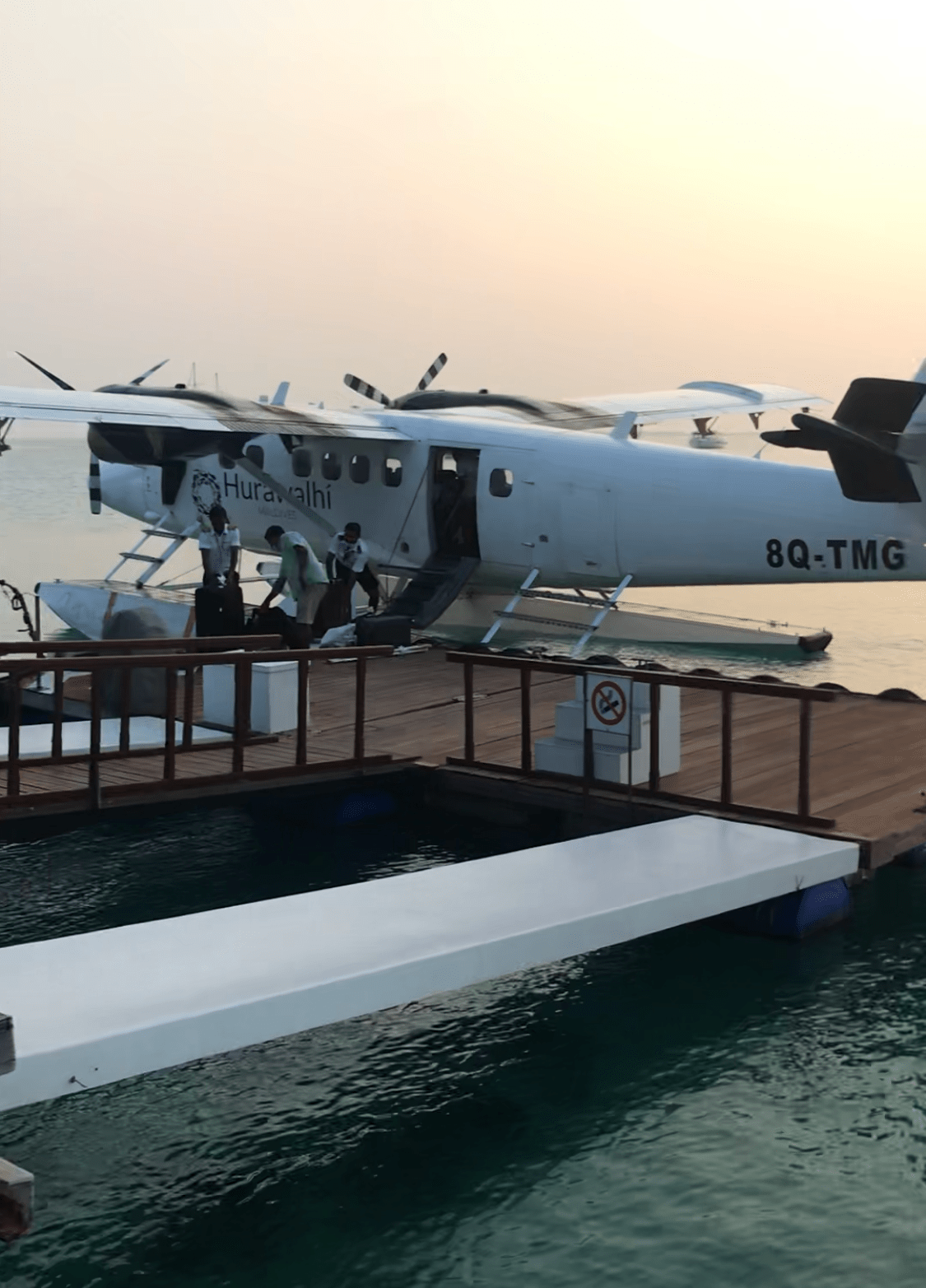
The little sea plane
The little water plane that flew me from the capital to my resort island was a surreal experience. I had to pay extra for my over weighted bag, which made perfect sense when you saw the size of this thing. The captain was wearing shorts and sandals, the luggage was strapped down with bungee cables in the back and there were only 8 seats for passengers. We landed at the pier in Kuredu, and just like in the movies, were greeted with a cold beverage and a moist towelette. I was upgraded to a beach bungalow with an ocean view, and my first moment alone in this gorgeous little cabin, I thought about where I started my diving journey to where I am now. From an old rickety shack I shared with cockroaches and lizards, with glassless windows and a salt water shower; to a four poster bed, luxury soaps, a mini fridge fully stocked and AC throughout. Not to say one was better than the other, both shaped my life as a diver and came at the exact right time in my life.
I still drank both bottles!
It wasn’t my first solo travelling experience, but when I saw the bottle of champagne in my room with 2 glasses and the advertisement for a couple’s photography session, I felt a pang of aloneness (not to be confused with loneliness). Didn’t help that I was in this picturesque honeymoon resort over valentine’s day. Don’t worry, one of the waiters took pity on me and fashioned a rose out of a napkin for me. It was soon overshadowed by the friendly staff, the companionship of books at meal times, and awesome diving.
The Divemaster course was a little daunting initially, I didn’t really know what was involved at first (and no one ever sat down to explain it), but taking it one day at a time and cuddling my Encyclopaedia of Recreational Diving at night, helped. Basically, you have a set of performance requirements that you get scored on out of 5 for each, and to pass you have to gain a minimum point score. There are 24 skill demonstrations that you have to master and perform in such a way that appears smooth, easy and repeatable for students. This was probably one of my favourite parts of the course. I really enjoy showing off my niche set of skills and what better way to do that than to remove various parts of my equipment and replace them with no problems.
The stress test was another notable experience from the Divemaster course. After speaking with other PADI Pros, I’ve come to learn I actually received a fairly tame version of this test. You may have heard this term affiliated with the Navy (if not, youtube some videos right now). Let me put your mind at rest that the Divemaster stress test is nothing like the Navy one, and the name has only been borrowed ironically. So, with another diver (usually another Divemaster candidate) you have to swap all of your gear underwater. Including mask, fins, weight belt and BCD (you get to keep your own wetsuit), and you have to do this while sharing air. Which means you both use only one regulator and you have to blow bubbles while the other person is using it. Oh, you also have to remain neutrally buoyant the entire time. The origins of this test and its reasoning has been long lost, with Cronin and Erickson laughing at the generations of professional divers that followed them.
Twilight dive
This was a pretty intense journey for me, the jump from recreational diving to professional diving is a big one that only 8% of PADI divers take. I had the highest highs and the lowest lows, sometimes in the same day. I think because this career path was something no one really expected me to take, not even myself. Since my whole life prior to this endeavour I relied and prided myself mainly on my academic achievements and conceptual intelligence, whereas a lot of professional diving relies on bodily coordination, muscle memory and good judgement. Skills that I had to work hard to quickly refine, ones that I am still and will continue to improve throughout my professional diving career. Definitely beats sitting at a desk for 8 hours a day.
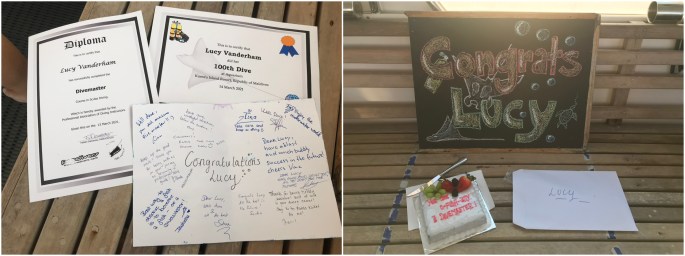
The lovely crew helped me celebrate my achievements
My gold Specialty Certification card collection and Master Scuba Diver certificate
Specialties have granted me the most enjoyable diving journey, but they are not a necessary stepping stone towards making a career out of scuba diving, and many say they are just a money-making scheme. However, you do need a minimum dive number in order to start the professional diving courses, and if like me, you powered through to rescue diver in only 20 dives then you’ll have a while to go before you reach the minimum. It’s a common theme in my life that I don’t do anything by half measures, so if I am going to be a professional diver then I am going to work my hardest to be the best version of Scuba Diver Lucy that I possibly could be. So, it made sense that I used my required 30 further dives to explore different diving conditions and opportunities, through speciality courses. And I really believe I wouldn’t be nearly as confident and skilled underwater as I am had I chosen not to do specialities. Plus, you get really cool GOLD certification cards and the option to become a Master Scuba Diver after completing five specialities, which has a nice ring to it.
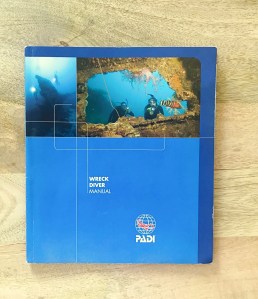
Wreck Diving
Wreck Diver Manual
I had a vague idea of which specialities I wanted to do, ones that would allow me the most diverse diving opportunities and experiences. But within that, it was primarily the destination that dictated the course. South Africa offered a great place to start wreck diving, hosting a range of beginner and intermediate wrecks. Unfortunately, we were confined to just one wreck for the duration of my course as the weather was pretty turbulent and caused some intense surge and waves, meaning our wading water entry was somewhat less than graceful. The crests were just about slapping us in the face and my instructor even lost her mask! But the wreck we did get to was perfect for the skills I needed to practice, mainly focused around wreck penetration and using the penetration reel correctly (when you do enough wreck diving, you eventually become unperturbed by the word penetration). It’s fumbly work, and yes I did get tangled in the reel, and yes I did kick up silt in the wreck, and yes I did drop the torch… but I eventually got the hang of it, and wreck diving is now my favourite type of diving.
Night Diving
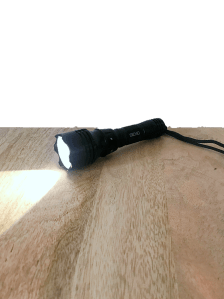
Dive Torch
I was drawn to night diving after hearing stories of the amazing bioluminescent organisms that can create an unbelievable underwater light show for you. And the opportunity to observe nocturnal animals at their most active. But we didn’t see any of that. The Floridian nearshore stays shallow for a very long way and so the deepest we got to was 3.9 meters. Shallow diving is more demanding of your buoyancy skills, as you have less space between the surface and the ocean floor. If some in your diving group or buddy team aren’t as experienced, their movements can easily kick up sand which severely impacts visibility. Coupled with windy January weather and the subsequent poor visibility caused by wind, we could barely see our hand in front of our faces… and it was pitch black of course. But in a way, I’m really glad that this was how I learnt to night dive. They say the conditions that you learn in should always be the baseline of what you dive in thereafter, as a safety precaution so divers don’t put themselves at risk in conditions they’ve never experienced. So, if anything, this means I will struggle to find any worse conditions that would stop me from night diving in the future. The night diving skills could be categorised as learning to communicate with your torch, and the extra safety precautions that should be taken.
Dry Suit Diving
Dry Suit Diver Manual
In the same way that the night diving course was primarily focused on being exposed to new diving environments/safety techniques and different types of equipment, with only a handful of practical skills, so too was the dry suit diving course. I was extra nervous about the dry suit course, since I pride myself on having pretty excellent buoyancy skills and this dry suit was about to throw a huge spanner in the works. My nerves were not calmed any by turning up and finding myself in a group of 11 men, with myself being the only woman there. Of course, it turned out these guys were super friendly and helpful, and a lot of them were just as nervous as me. There were two main skills to master; firstly, being able to adjust the amount of air in the dry suit through the new inflator valve in the middle of your chest and the deflator valve on your shoulder, and also being able to redistribute the air in the dry suit. It was quite the odd sensation having your instructor tip your head down and your feet up. Once those were out of the way, we had the most incredible two dives, and I can’t wait to get back into Scottish water.
Navigation
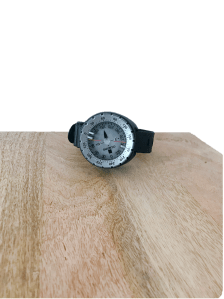
Dive Compass
If someone had said to me at the start of my diving journey that I’d end up doing a speciality course in navigation, I’d have said there isn’t enough money in the world to convince me. I did an intro to navigation dive during my advanced course as well as intro to search and recovery, so I told myself that was probably enough of the difficult stuff, let’s stick to the exciting specialities. But once I knew that I wanted to pursue diving as a career, navigation skills were suddenly back on the radar and I signed up for this course, somewhat begrudgingly. But it’s super important as a diver, and just generally in life I guess, to refrain from relying just on the skills you’re naturally or effortlessly better at, and instead work to become a better all-round professional. In any case, turns out the navigation course was one of the most enjoyable courses I’ve done! If you ever need someone to relocate found treasure or draw a to-scale map of a wreck using only a compass, I’m your gal. The skills were maths heavy, which isn’t my strong suit, but having a retired maths teacher as my instructor, I was in a pretty fortunate position to learn.
Deep Diver
Deep Diver Manual
Another course with a low emphasis on new practical skills, but very high emphasis on safety measures and conservative diving techniques. A fairly self-explanatory course here, we got deep. I recorded my deepest dive to date, 39.8m, certifying me to 40m. Of course, always obeying limits, deep diving means short dives and long surface intervals, with a clear understanding of no decompression limits and decompression stops. Anything past 40m, and you’re into technical diving, which requires a lot of further training. But 40m is a pretty reasonable limit for recreational diving, giving you a bottom time of around 10 minutes without the need for a decompression stop. You have also got to be careful of becoming narcked at that depth. Gas narcosis is a very interesting but dangerous diving phenomenon, the likelihood of which increases with depth and can cause you to lose judgement, reduces your reaction time and negatively impacts your fine motor skills. I do enjoy pushing myself and so the deep diving course was a really exciting way to safely step out of my comfort zone.
Enriched Air
Dive Computer
I know you only need five specialities to become a Master Scuba Diver, but I was encouraged to do one last one as it pairs so nicely with the deep diver course and opens another door to better and more enjoyable diving. Looking back now, even if I had done the enriched air course earlier, I still would’ve done all six as I couldn’t pick one I feel I don’t need or haven’t since used. Basically, learning to dive with nitrox (a gas mix with higher oxygen content), allows you to have a longer bottom time, since there is less nitrogen in the gas you are breathing and therefore less nitrogen being absorbed into your tissues. A large part of this course is learning about oxygen toxicity under pressure, and how diving with nitrox imposes a new depth limit to be observed, depending on the percentage mix. To verify the gas percentage mix in your cylinder, you get to play with a fun little analyser machine, and new settings on your dive computer.
Divers are always encouraged to continue their education, even past the professional realm of Divemaster and Instructor, as there is so much to experience and learn in the underwater world. It’s an exciting feeling to know there’s always somewhere or something new to experience.
Madagascar was the first and, so far, the most significant experience in my diving career. I talk more about that in my previous blog post. In this post I’ll focus on the diving. Diving in the Mozambique Channel was like something out of The Little Mermaid! The corals are huge; so vibrant and colourful, there are so many different species of coral both hard and soft (trust me, I had to learn every single one for my benthic studies). These spectacular organisms attracted the most amazing array of fish and aquatic life, resulting in an ecosystem so varied and interconnected: from microplankton to whale sharks, and all the algae, invertebrates and hundreds of species of fish in between. Nudibranches are definitely on the smaller end of this scale but are one of my favourite creatures to find. Considering this was my introduction to the ocean and scuba diving, it’s safe to say I was absolutely spoilt!
Ontario, Tobermory 2017
Talk about going from one end of the spectrum to the other. Madagascar has an ocean temp of 28 degrees Celsius so only required a rash guard as my exposure suit. Tobermory is freshwater lake diving with a water temperature of 8 degrees Celsius (in July), requiring a 7mm sleeveless full suit, plus a 7mm shorty on top, plus hood and gloves. Because it had been a while since I had last been diving, a refresher course was necessary. Fortunately, my brother came with me and it was such a fun experience, we had the best day.
Fathom Five Marine National Park
Don’t get me wrong, any time spent in scuba or in water is bliss for me, but the actual dive here wasn’t as visually spectacular as I was used to. The refresher course took focus of the dive and so by the time we finished the skills we didn’t have time to make it out deep enough to see much. However, experiencing cold, freshwater diving was incredible and the experience definitely made me an all-round better diver. Especially with the added challenge of buoyancy. Since you are much less buoyant in fresh water, you compensate by adding more air to your BCD, the extra air in your BCD means your buoyancy is affected more by depth (as air compresses with depth and expands as you get shallower)… as I said, definitely improved my skills as a diver.
Bali, Gilli T 2018
Accompanying a friend on one of her first ever dives
Back in my beloved Indian Ocean! Bit of back story: I had just been dumped, so decided to haul my heartbroken butt on a trip to Indonesia with my friends. Fun fact, this is also when I became vegan.
As you already know, the reefs and marine life in the Indian Ocean are unbelievable. The sharks, rays and turtles we saw here are truly breathtaking. The sheer number of them was astounding! I’ve never seen so many in one place – especially Turtles Bay, where there must have been at least 30 turtles in an area of about ten square meters. I also had the best encounter with a Mumma white-tipped reef shark who had her lil baby swimming alongside, she swiftly told us to leave the area and we did.
Since I started diving I have understood that I am entering these animals’ home and so treating it and them with respect comes naturally. Unfortunately, some of the others in the group did not appreciate that we were in their territory and would get far too close, sometimes touching the animals. One of them even made an octopus ink by getting too close with his GoPro – it broke my heart! But every experience has shaped me as a person, and the type of instructor I want to be. All of my students will be taught that respect and consideration for marine life is Rule Number One.
South Africa, Cape Town 2019
My sister and I in front of a very dramatic South African backdrop
Being a university student doing an Arts Degree in a field of study that can encompass a broad spectrum of disciplines, it was ‘exceptionally fortunate’ that the classes I chose for my second semester of third year didn’t include final exams. So, I found myself finishing the year in the second week of April, before the examination diet even started, instead of mid-June. What better way to spend an extra few weeks of summer holidays (and my birthday) than visiting my sister in Cape Town, where she was working for a while. I even convinced her to do a try-dive with me (she had mixed feelings) but when your best skill is only doable under pretty niche circumstances, it felt kind of cool to show off in front of her.
This is where I undertook my first speciality course – Wreck Diving. I have since completed six speciality courses and thus concluded that I started with the hardest. I’ll talk more about each of the specialities I’ve undertaken in my next blog post. If you’ve seen ‘My Octopus Teacher’ on Netflix you’ll know just how spectacular the kelp forests of the Western Cape can be. Our experience was no different, exploring a forest in 3 dimensions is indescribable. Imagine you were able to float from the base of a tree to way above the canopy, observing all the life that occupies the different habitats. It was incredible. The wrecks I visited for my training were, understandably, beginner wrecks. So, while they are still very cool and host lots of octopus and small sharks and loads of other interesting fish, the wreck penetration opportunities were very limited.
Florida, Sarasota 2020
January 2020… a precious time when we all thought 2020 was going to be ‘our year’. Little did we know! By this point I had decided that diving is so important to me that I needed to pursue it as a career. This meant I needed a few more specialities under my belt. I decided to do the Night Diving course in Florida.
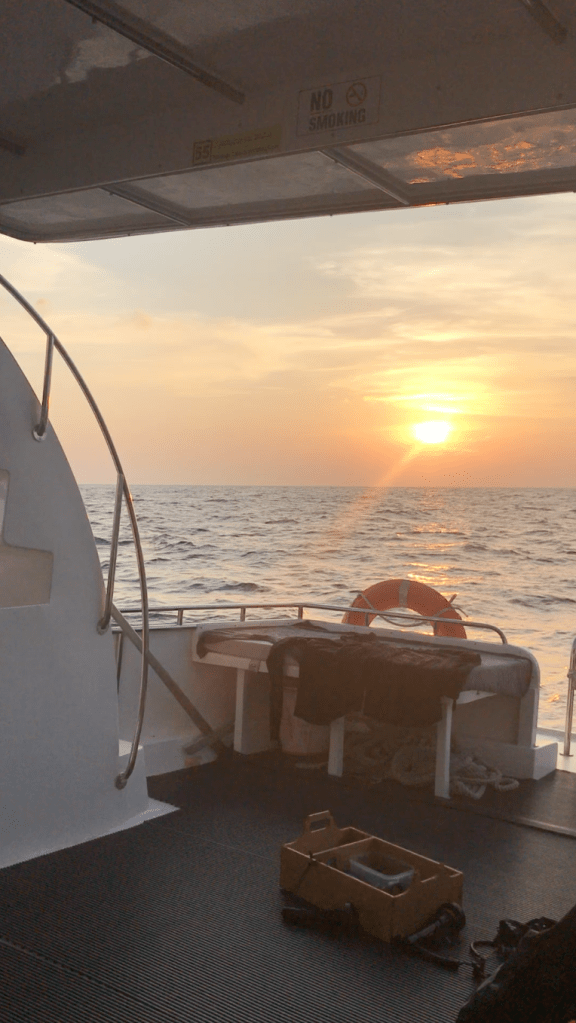
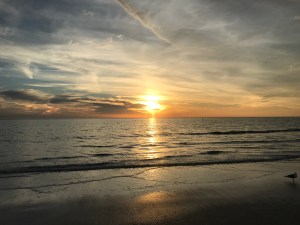
Mainly for ease, but also partly for safety, we stuck to shore diving – which is a good idea when doing your night diving orientation in case of buddy separation, it’s much easier to surface and find the shore than surface and find your boat. As I found out, the Floridian nearshore region stays pretty shallow for a fairly long distance, which meant that shore diving included surface swims of about 10 minutes in order to get any deeper than 3 meters. But what a way to watch the sunset!
A Floridian sunset
Night diving itself is exhilarating, the added challenge of limited visibility really gets the heart going and adrenaline pumping. When the resource you rely on most heavily for safety and enjoyment is almost completely taken away, it forces you to practice and improve on your other skills and instincts. Again, another noteworthy experience that allowed me to improve as a diver. As for the wildlife, we saw mainly killifish as they were attracted to the torchlight. However, we did get a brief hello from the endangered bonnethead shark and some very creepy looking arrowhead crabs.
Scotland, Burnt Island 2020
I’m a little embarrassed to admit that being lucky enough to learn to dive in the Indian Ocean, I was decidedly a tropical-water-only (or cocktail) diver. I very much turned my nose up at cold water diving, and I must confess I wasn’t interested in the diving possibilities that are right on my own doorstep. That was until a global pandemic hit and suddenly ‘right on my own doorstep’ became a very attractive option. So, after losing a 7-month trip to Fiji, New Zealand, and The Seychelles to 2020, I decided to embrace cold water diving as it seemed I wasn’t going to be leaving Scotland any time soon. I signed up to do my Dry Suit speciality as a commitment to pursuing cold water diving.
Loch Grannoch – nowhere near where I was diving but I don’t have any pictures of my Scottish dives
I had this preconceived notion that Scottish diving would be boring and cold, nothing to see with poor vis and no life. I could not have been more wrong! Firstly, dry suit diving opens a whole new world, I was warm and comfortable the whole time, which allowed me to fully enjoy Scotland’s surprising underwater world. As a benthic buff I was blown away by the massive crustaceans and invertebrates. There is even some hard coral to admire. And for the divers who prefer mammals, there were plenty of playful seals. And how was I able to enjoy this? With a visibility of at least ten meters. Next on my Scottish Diving Bucket List is basking sharks and the wrecks of Scapa Flow.
Malta, St Pauls Bay 2020
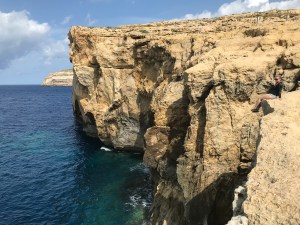
At the Blue Hole, Gozo
This trip was basically a diving mission. I crammed what would have taken 6 weeks in Fiji into 2 weeks in Malta. I did 20 dives and 3 speciality courses! I had no idea what the rest of this year or next year would look like and wanted to be ready to start my professional diving courses as soon as the opportunity arose. By the end, I had successfully gained the title of Master Scuba Diver, the highest rank of recreational diving.
It’s arguable that I learned more and improved the most on this trip than all the rest put together (maybe not including Madagascar). For one thing, doing three new specialities, which I always find so fun and are definitely beneficial in improving my diving. But also the new dive environments I was experiencing. The Maltese wrecks were mind blowing, like nothing I’ve ever seen. We penetrated the infamous Um el Faroud for almost 15 minutes, going from kitchen to engine room, from bow to stern. Another dive from this trip that will stay with me was Lantern Point. The smallest, tightest swim-throughs I’ve ever done, it really tests you as a diver. Buoyancy, position, confidence and awareness have to be perfect to get through these tiny overhead spaces. Check out my youtube channel for some videos of these amazing dives. At this point the Mediterranean Sea is scoring huge points in my book. Not to mention the countless nudibranchs, octopus, eagle rays and scorpion fish waiting to be spotted by our awesome instructor who always knew exactly where to look.
The Maldives, Kuredu 2021
This is where I undertook the all important first step on the professional diving ladder. You can read about my time during the Divemaster course, in my blog post: Passion to Pro.
Again, I cannot stress how grateful I am and how lucky I feel to have experienced so many amazing places to dive. The Maldives is very high on the list of best places. Kuredu Island Resort had, what they called, their House Reef. Which was this beautiful reef wall only a very short distance from the shore. I came to know this reef extremely well, and this was the first reef I guided my very own customers on. I also created a site map of the House Reef and took refresher students there as part of my Divemaster course.
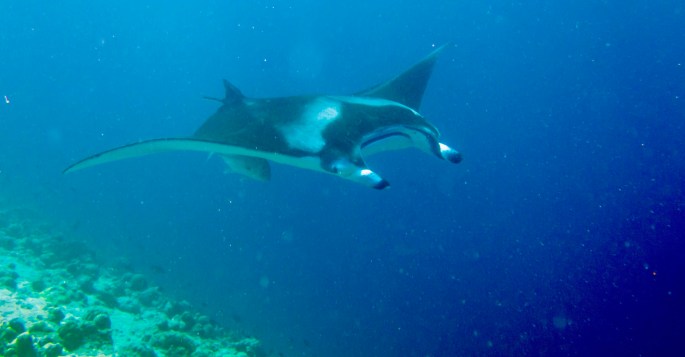
As you’d expect, the reefs offered by The Maldives are absolutely spectacular. The highlight definitely being the Manta Rays, which were pretty much guaranteed on every dive. Choosing between watching your customers and watching these magnificent creatures was always a tough choice to make! Drift diving and nitrox diving are the norm in The Maldives, so long bottom times just soaring through the ocean, watching all of these migratory animals pass by like Rays and Sharks. Sometimes even using a reef hook to keep yourself in place as strong oceanic currents put on a display of life for you.
Anemones’ Bioluminescence
Kuredu was also the setting for the best night dive I have ever had in my life. The temperature of the water was just right, that you could hardly tell where your body ended and the water began. The narrowing of your field of vision with the torch light completely captured your attention. And we were even equipped with fluro torches to see the coral and anemones bioluminess.
So, I’d dropped out of university (the second attempt went much better) and I thought, why not go to Africa for 8 weeks? Scuba diving had never been hugely on my radar, it was sort of filed away as ‘something some people did’. But I’d always had a very deep passion for the environment and conservation, thanks to one fantastic geography teacher, clichéd as it might sound. As an environmentally inclined 19-year-old, a google search on what to do during a ‘gap year’, meant clicking on the first hit and persuading my mum that 2 months scuba diving in Madagascar was the best thing for me to do during my time off.
Saving Adam during rescue course
Quick pic during one of our first lessons
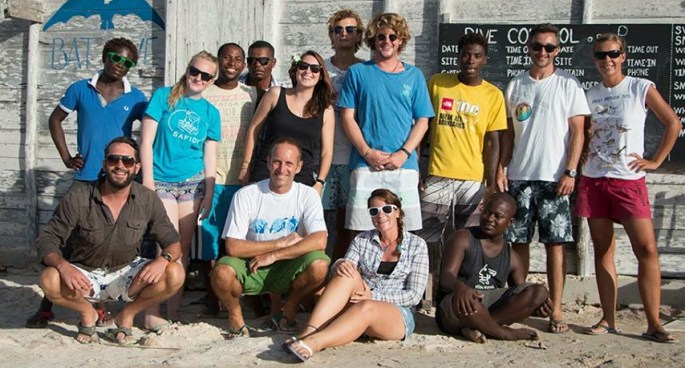
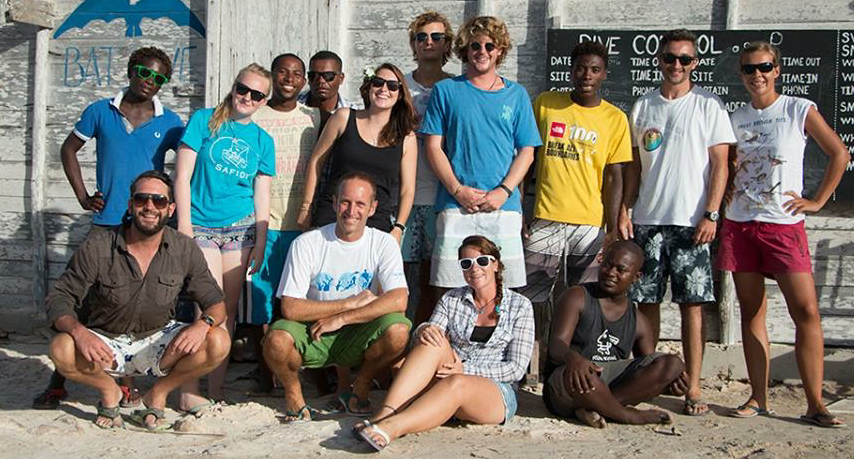
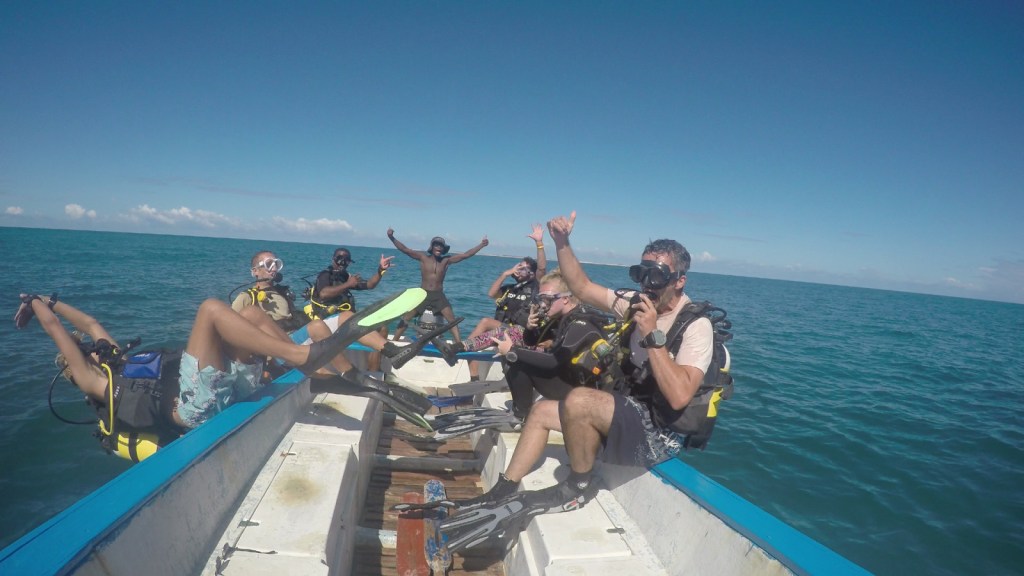
Amazingly, she agreed and off I went with a 45-kilogram bag full of equipment I had no idea how to use. People asked me what would happen if I’d gotten there and hated diving! But I think a large part of why I immediately fell in love with diving was the circumstances under which I first experienced it. There was no other choice but to love it – I had signed up for 8 weeks of learning to scuba dive, benthic identification education, underwater surveying training, and sailing lessons, that was the deal. Of course, it was helped hugely by the dive instructor I had. Bic was the friendliest, funniest and most passionate instructor I have ever come across, and led me through open water, advanced and rescue (PADI) courses. He is the type of instructor I will constantly work to become. In fact, everyone I met there was unbelievably awesome – a testament, I think, to the power of doing what you love. It makes you the best version of yourself.
Playing frisbee on a no-dive day
The Malagasy people I had the absolute privilege of meeting and living alongside were just the best kind of people. They were always laughing and smiling, they were infallibly generous, and they were so close to nature in ways I had never imagined (and I’m not just talking about the way they would bite through a whole fish – scales, bones and all. Or the way they could scale a coconut tree in 10 seconds. Or even the way they could walk through dozens of sea urchins without a single misstep.)
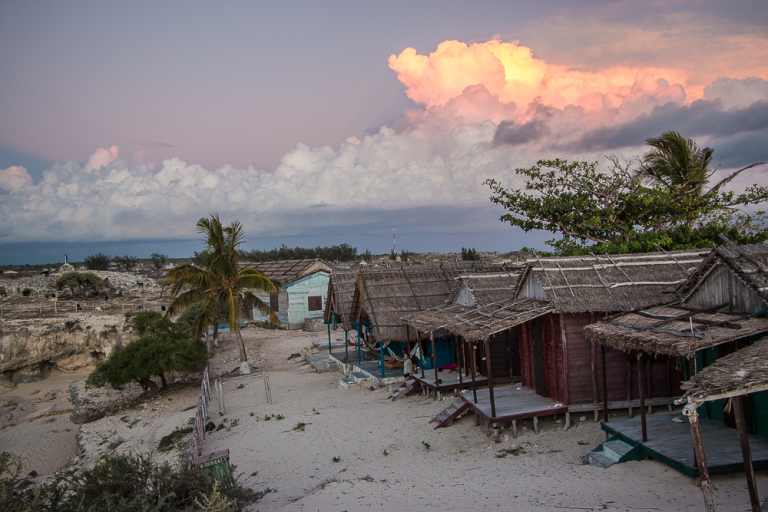
The huts we called home for 8 weeks
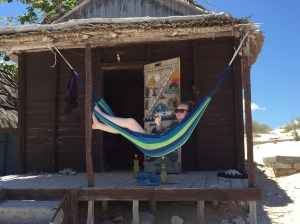
This helped the mediation too
Here’s a big reason why I fell in love with diving, one I didn’t expect in the slightest. I found it to be a really powerful form of meditation, with similar effects to mindfulness. It completely and utterly occupies all of your brain and all of your senses, it is the ultimate pull to the immediate present. All your focus is on your equipment: deflating/inflating your BCD, regularly checking your SPG, watching your NDL*. And on your body: controlling your buoyancy with your breath, streamlining your equipment, keeping your position horizontal. And on safety: checking water conditions, understanding the specifics of the dive site, navigation. And not to mention actually enjoying seeing and experiencing your dive. While I respect and appreciate the benefits of meditation, I had never been very good at traditional methods, but diving gave me a whole new way to connect my mind and body in the present moment.
Iraike, roa, telo, aleha! (1, 2, 3, GO!)
I talk more about the actual diving in my next post, along with quick summaries of my diving experiences thus far.
Lunch!
Fresh water to fight the V&D
The time spent on dry land in Madagascar was crazy. We showered and brushed our teeth in salt water, we ate fish three times a day seven days a week, the giant screaming flying cockroaches would keep you up at night, the V&D hit twice and led to a kidney infection, the heat was a brutal 50 degrees Celsius and 100% humidity, we had to bang ants out of the bread and fight off crabs for the jam. It was the best 8 weeks of my life.
* Buoyancy Control Device; Submergible Pressure Gauge; No Decompression Limit














 Dive With Lucy