
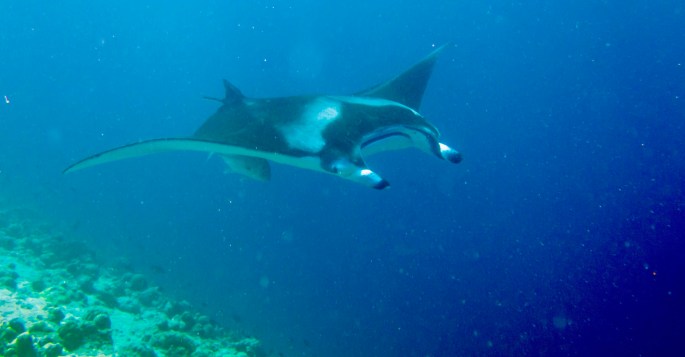
How do you even attempt to describe paradise!?
Dressed in my best ‘basic white girl’ travelling attire (Bicycle shorts and a tie dye crop top, of course), with a bag full of scuba equipment and a few bikinis tucked around it, I stepped off the plane in Malé.
The Maldives had been on the bucket list for a while, since rising ocean levels meant it would soon be an impossibility. So, when the ‘safe to travel’ list during the virus that shall not be named, gave it a green light, I was pretty stoked. I was a fresh university graduate who was unable to celebrate my graduation or attend normal job interviews, so what better time to take advantage of the ‘travel for education’ permits and spend 5 weeks in white sand and blue water paradise.
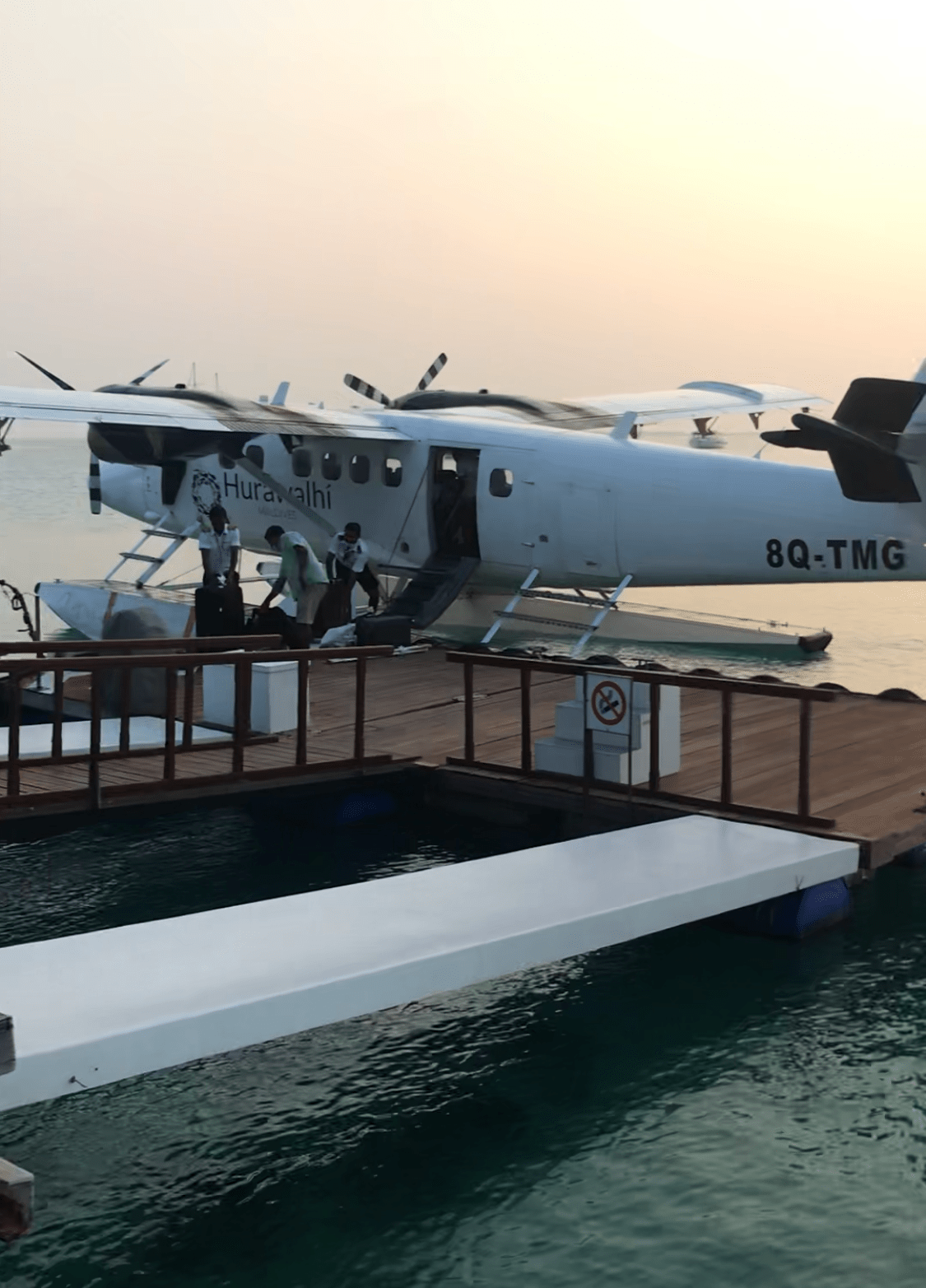
The little water plane that flew me from the capital to my resort island was a surreal experience. I had to pay extra for my over weighted bag, which made perfect sense when you saw the size of this thing. The captain was wearing shorts and sandals, the luggage was strapped down with bungee cables in the back and there were only 8 seats for passengers. We landed at the pier in Kuredu, and just like in the movies, were greeted with a cold beverage and a moist towelette. I was upgraded to a beach bungalow with an ocean view, and my first moment alone in this gorgeous little cabin, I thought about where I started my diving journey to where I am now. From an old rickety shack I shared with cockroaches and lizards, with glassless windows and a salt water shower; to a four poster bed, luxury soaps, a mini fridge fully stocked and AC throughout. Not to say one was better than the other, both shaped my life as a diver and came at the exact right time in my life.

It wasn’t my first solo travelling experience, but when I saw the bottle of champagne in my room with 2 glasses and the advertisement for a couple’s photography session, I felt a pang of aloneness (not to be confused with loneliness). Didn’t help that I was in this picturesque honeymoon resort over valentine’s day. Don’t worry, one of the waiters took pity on me and fashioned a rose out of a napkin for me. It was soon overshadowed by the friendly staff, the companionship of books at meal times, and awesome diving.
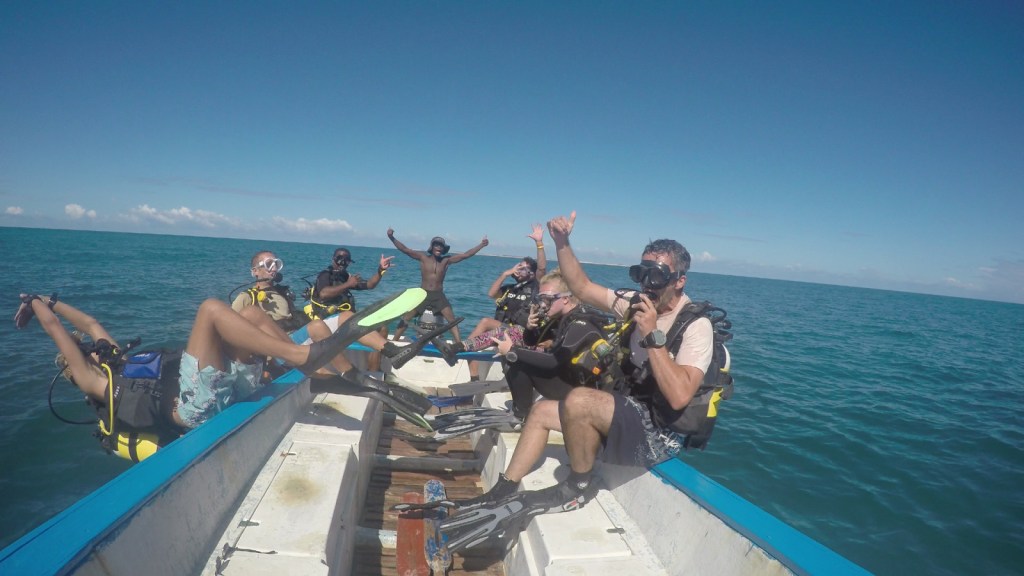
The Divemaster course was a little daunting initially, I didn’t really know what was involved at first (and no one ever sat down to explain it), but taking it one day at a time and cuddling my Encyclopaedia of Recreational Diving at night, helped. Basically, you have a set of performance requirements that you get scored on out of 5 for each, and to pass you have to gain a minimum point score. There are 24 skill demonstrations that you have to master and perform in such a way that appears smooth, easy and repeatable for students. This was probably one of my favourite parts of the course. I really enjoy showing off my niche set of skills and what better way to do that than to remove various parts of my equipment and replace them with no problems.
The stress test was another notable experience from the Divemaster course. After speaking with other PADI Pros, I’ve come to learn I actually received a fairly tame version of this test. You may have heard this term affiliated with the Navy (if not, youtube some videos right now). Let me put your mind at rest that the Divemaster stress test is nothing like the Navy one, and the name has only been borrowed ironically. So, with another diver (usually another Divemaster candidate) you have to swap all of your gear underwater. Including mask, fins, weight belt and BCD (you get to keep your own wetsuit), and you have to do this while sharing air. Which means you both use only one regulator and you have to blow bubbles while the other person is using it. Oh, you also have to remain neutrally buoyant the entire time. The origins of this test and its reasoning has been long lost, with Cronin and Erickson laughing at the generations of professional divers that followed them.
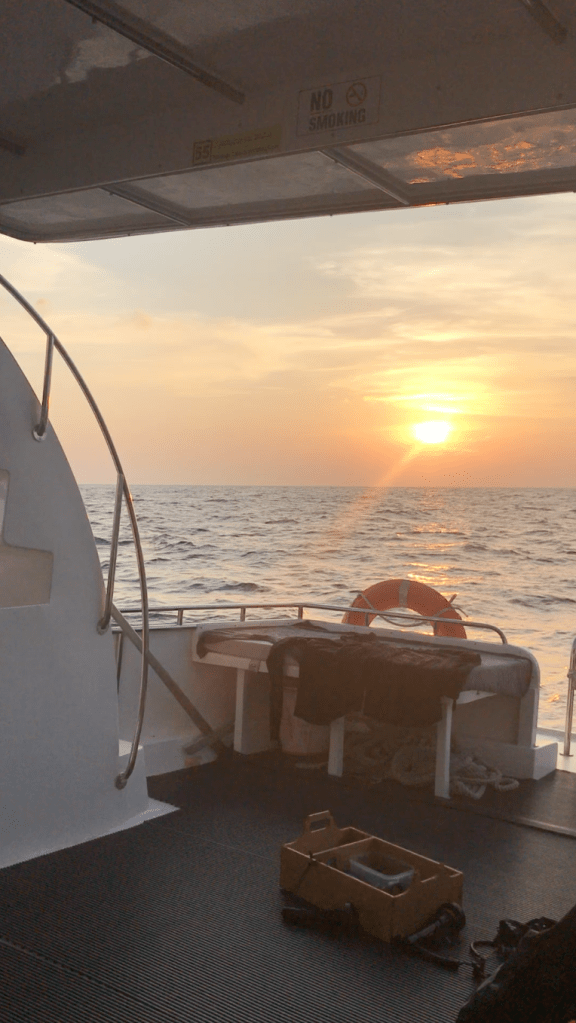
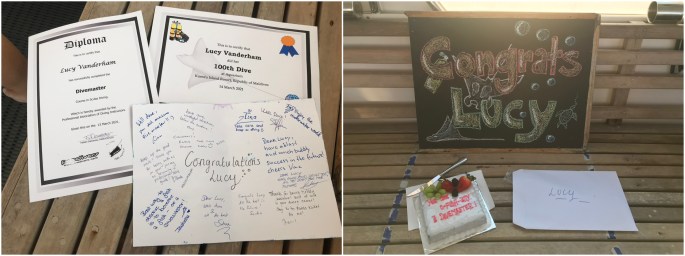
This was a pretty intense journey for me, the jump from recreational diving to professional diving is a big one that only 8% of PADI divers take. I had the highest highs and the lowest lows, sometimes in the same day. I think because this career path was something no one really expected me to take, not even myself. Since my whole life prior to this endeavour I relied and prided myself mainly on my academic achievements and conceptual intelligence, whereas a lot of professional diving relies on bodily coordination, muscle memory and good judgement. Skills that I had to work hard to quickly refine, ones that I am still and will continue to improve throughout my professional diving career. Definitely beats sitting at a desk for 8 hours a day.




 Dive With Lucy