

Madagascar, Andavadoaka 2015/16
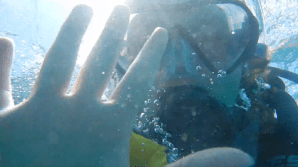
Madagascar was the first and, so far, the most significant experience in my diving career. I talk more about that in my previous blog post. In this post I’ll focus on the diving. Diving in the Mozambique Channel was like something out of The Little Mermaid! The corals are huge; so vibrant and colourful, there are so many different species of coral both hard and soft (trust me, I had to learn every single one for my benthic studies). These spectacular organisms attracted the most amazing array of fish and aquatic life, resulting in an ecosystem so varied and interconnected: from microplankton to whale sharks, and all the algae, invertebrates and hundreds of species of fish in between. Nudibranches are definitely on the smaller end of this scale but are one of my favourite creatures to find. Considering this was my introduction to the ocean and scuba diving, it’s safe to say I was absolutely spoilt!
Ontario, Tobermory 2017
Talk about going from one end of the spectrum to the other. Madagascar has an ocean temp of 28 degrees Celsius so only required a rash guard as my exposure suit. Tobermory is freshwater lake diving with a water temperature of 8 degrees Celsius (in July), requiring a 7mm sleeveless full suit, plus a 7mm shorty on top, plus hood and gloves. Because it had been a while since I had last been diving, a refresher course was necessary. Fortunately, my brother came with me and it was such a fun experience, we had the best day.
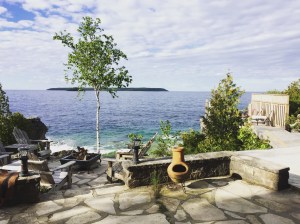
Don’t get me wrong, any time spent in scuba or in water is bliss for me, but the actual dive here wasn’t as visually spectacular as I was used to. The refresher course took focus of the dive and so by the time we finished the skills we didn’t have time to make it out deep enough to see much. However, experiencing cold, freshwater diving was incredible and the experience definitely made me an all-round better diver. Especially with the added challenge of buoyancy. Since you are much less buoyant in fresh water, you compensate by adding more air to your BCD, the extra air in your BCD means your buoyancy is affected more by depth (as air compresses with depth and expands as you get shallower)… as I said, definitely improved my skills as a diver.
Bali, Gilli T 2018

Back in my beloved Indian Ocean! Bit of back story: I had just been dumped, so decided to haul my heartbroken butt on a trip to Indonesia with my friends. Fun fact, this is also when I became vegan.
As you already know, the reefs and marine life in the Indian Ocean are unbelievable. The sharks, rays and turtles we saw here are truly breathtaking. The sheer number of them was astounding! I’ve never seen so many in one place – especially Turtles Bay, where there must have been at least 30 turtles in an area of about ten square meters. I also had the best encounter with a Mumma white-tipped reef shark who had her lil baby swimming alongside, she swiftly told us to leave the area and we did.
Since I started diving I have understood that I am entering these animals’ home and so treating it and them with respect comes naturally. Unfortunately, some of the others in the group did not appreciate that we were in their territory and would get far too close, sometimes touching the animals. One of them even made an octopus ink by getting too close with his GoPro – it broke my heart! But every experience has shaped me as a person, and the type of instructor I want to be. All of my students will be taught that respect and consideration for marine life is Rule Number One.
South Africa, Cape Town 2019

Being a university student doing an Arts Degree in a field of study that can encompass a broad spectrum of disciplines, it was ‘exceptionally fortunate’ that the classes I chose for my second semester of third year didn’t include final exams. So, I found myself finishing the year in the second week of April, before the examination diet even started, instead of mid-June. What better way to spend an extra few weeks of summer holidays (and my birthday) than visiting my sister in Cape Town, where she was working for a while. I even convinced her to do a try-dive with me (she had mixed feelings) but when your best skill is only doable under pretty niche circumstances, it felt kind of cool to show off in front of her.
This is where I undertook my first speciality course – Wreck Diving. I have since completed six speciality courses and thus concluded that I started with the hardest. I’ll talk more about each of the specialities I’ve undertaken in my next blog post. If you’ve seen ‘My Octopus Teacher’ on Netflix you’ll know just how spectacular the kelp forests of the Western Cape can be. Our experience was no different, exploring a forest in 3 dimensions is indescribable. Imagine you were able to float from the base of a tree to way above the canopy, observing all the life that occupies the different habitats. It was incredible. The wrecks I visited for my training were, understandably, beginner wrecks. So, while they are still very cool and host lots of octopus and small sharks and loads of other interesting fish, the wreck penetration opportunities were very limited.
Florida, Sarasota 2020
January 2020… a precious time when we all thought 2020 was going to be ‘our year’. Little did we know! By this point I had decided that diving is so important to me that I needed to pursue it as a career. This meant I needed a few more specialities under my belt. I decided to do the Night Diving course in Florida.
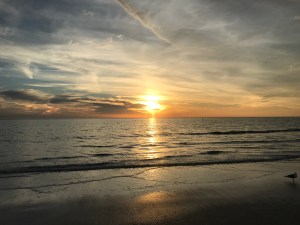
Mainly for ease, but also partly for safety, we stuck to shore diving – which is a good idea when doing your night diving orientation in case of buddy separation, it’s much easier to surface and find the shore than surface and find your boat. As I found out, the Floridian nearshore region stays pretty shallow for a fairly long distance, which meant that shore diving included surface swims of about 10 minutes in order to get any deeper than 3 meters. But what a way to watch the sunset!
Night diving itself is exhilarating, the added challenge of limited visibility really gets the heart going and adrenaline pumping. When the resource you rely on most heavily for safety and enjoyment is almost completely taken away, it forces you to practice and improve on your other skills and instincts. Again, another noteworthy experience that allowed me to improve as a diver. As for the wildlife, we saw mainly killifish as they were attracted to the torchlight. However, we did get a brief hello from the endangered bonnethead shark and some very creepy looking arrowhead crabs.
Scotland, Burnt Island 2020
I’m a little embarrassed to admit that being lucky enough to learn to dive in the Indian Ocean, I was decidedly a tropical-water-only (or cocktail) diver. I very much turned my nose up at cold water diving, and I must confess I wasn’t interested in the diving possibilities that are right on my own doorstep. That was until a global pandemic hit and suddenly ‘right on my own doorstep’ became a very attractive option. So, after losing a 7-month trip to Fiji, New Zealand, and The Seychelles to 2020, I decided to embrace cold water diving as it seemed I wasn’t going to be leaving Scotland any time soon. I signed up to do my Dry Suit speciality as a commitment to pursuing cold water diving.

I had this preconceived notion that Scottish diving would be boring and cold, nothing to see with poor vis and no life. I could not have been more wrong! Firstly, dry suit diving opens a whole new world, I was warm and comfortable the whole time, which allowed me to fully enjoy Scotland’s surprising underwater world. As a benthic buff I was blown away by the massive crustaceans and invertebrates. There is even some hard coral to admire. And for the divers who prefer mammals, there were plenty of playful seals. And how was I able to enjoy this? With a visibility of at least ten meters. Next on my Scottish Diving Bucket List is basking sharks and the wrecks of Scapa Flow.
Malta, St Pauls Bay 2020
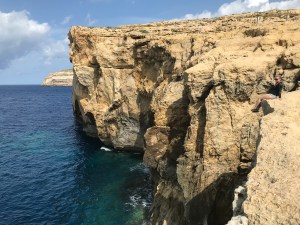
This trip was basically a diving mission. I crammed what would have taken 6 weeks in Fiji into 2 weeks in Malta. I did 20 dives and 3 speciality courses! I had no idea what the rest of this year or next year would look like and wanted to be ready to start my professional diving courses as soon as the opportunity arose. By the end, I had successfully gained the title of Master Scuba Diver, the highest rank of recreational diving.
It’s arguable that I learned more and improved the most on this trip than all the rest put together (maybe not including Madagascar). For one thing, doing three new specialities, which I always find so fun and are definitely beneficial in improving my diving. But also the new dive environments I was experiencing. The Maltese wrecks were mind blowing, like nothing I’ve ever seen. We penetrated the infamous Um el Faroud for almost 15 minutes, going from kitchen to engine room, from bow to stern. Another dive from this trip that will stay with me was Lantern Point. The smallest, tightest swim-throughs I’ve ever done, it really tests you as a diver. Buoyancy, position, confidence and awareness have to be perfect to get through these tiny overhead spaces. Check out my youtube channel for some videos of these amazing dives. At this point the Mediterranean Sea is scoring huge points in my book. Not to mention the countless nudibranchs, octopus, eagle rays and scorpion fish waiting to be spotted by our awesome instructor who always knew exactly where to look.
The Maldives, Kuredu 2021
This is where I undertook the all important first step on the professional diving ladder. You can read about my time during the Divemaster course, in my blog post: Passion to Pro.
Again, I cannot stress how grateful I am and how lucky I feel to have experienced so many amazing places to dive. The Maldives is very high on the list of best places. Kuredu Island Resort had, what they called, their House Reef. Which was this beautiful reef wall only a very short distance from the shore. I came to know this reef extremely well, and this was the first reef I guided my very own customers on. I also created a site map of the House Reef and took refresher students there as part of my Divemaster course.
As you’d expect, the reefs offered by The Maldives are absolutely spectacular. The highlight definitely being the Manta Rays, which were pretty much guaranteed on every dive. Choosing between watching your customers and watching these magnificent creatures was always a tough choice to make! Drift diving and nitrox diving are the norm in The Maldives, so long bottom times just soaring through the ocean, watching all of these migratory animals pass by like Rays and Sharks. Sometimes even using a reef hook to keep yourself in place as strong oceanic currents put on a display of life for you.

Kuredu was also the setting for the best night dive I have ever had in my life. The temperature of the water was just right, that you could hardly tell where your body ended and the water began. The narrowing of your field of vision with the torch light completely captured your attention. And we were even equipped with fluro torches to see the coral and anemones bioluminess.
 Dive With Lucy